
Deviated septum, sinus congestion, and nasal obstruction
Deviated Septum, Sinus Congestion & Nose-Surgery Questions in Austin
A practical guide for people weighing a deviated septum, an old broken nose, chronic congestion, sinus pressure, balloon sinuplasty, septoplasty, rhinoplasty, endoscopic sinus surgery, and conservative consultation options like Cranial Facial Release.
In this guide
CFR Is Not A Nose-Surgery Replacement
If you are dealing with chronic congestion, sinus pressure, nasal blockage, a deviated septum, or breathing changes after a broken nose, it is understandable to look for a non-surgical option first. Nobody wants to rush into septoplasty, balloon sinuplasty, rhinoplasty, or endoscopic sinus surgery without knowing whether they really need it.
"I want to avoid surgery" and "this is a true alternative to surgery" are not the same statement. This guide keeps the line clear.
ENT procedures exist for specific anatomical and sinus-disease problems. Allergic rhinitis, chronic rhinosinusitis, recurrent acute rhinosinusitis, deviated septum, nasal valve problems, polyps, and post-traumatic nasal obstruction are not interchangeable. The right next step depends on diagnosis, severity, duration, exam findings, imaging when appropriate, and what has already been tried.
Seek medical or ENT evaluation promptly if you have severe facial pain, high fever, swelling around the eye, vision changes, severe headache, stiff neck, confusion, new neurological symptoms, significant facial trauma, one-sided nasal blockage that is worsening, recurrent sinus infections, persistent drainage with blood, or breathing changes after a broken nose.
CFR should not delay urgent care, diagnostic imaging, antibiotics when medically indicated, allergy care, ENT evaluation, or surgical consultation when those are the appropriate lanes.
What Your Symptoms May Point To
Congestion is a symptom, not a diagnosis. "Sinus pressure" may come from rhinosinusitis, allergy, migraine, dental issues, jaw tension, nasal obstruction, or something else entirely. A deviated septum may be present on exam but not always be the main reason someone feels blocked. A prior broken nose may matter, but the question is what structure, airflow pattern, or tissue change remains now.
| What You Notice | Possible Lane | What To Clarify First |
|---|---|---|
| Seasonal congestion, sneezing, itchy nose, clear drainage | Allergic rhinitis | Allergy triggers, medication response, nasal steroid or antihistamine use, and whether symptoms are seasonal or year-round. |
| Facial pressure, thick drainage, smell changes, symptoms lasting weeks or recurring often | Sinusitis or chronic rhinosinusitis | Duration, infection pattern, prior medical therapy, nasal endoscopy, and CT findings when ENT evaluation is needed. |
| One-sided nasal blockage or blockage after trauma | Septal deviation, nasal valve issue, turbinate issue, or post-traumatic structural change | ENT-style nasal exam, severity, prior fracture history, and whether medical management has failed. |
| Considering balloon sinuplasty or endoscopic sinus surgery | Selected chronic or recurrent sinus disease after appropriate medical care | Diagnosis supported by symptoms plus objective findings, and whether balloon dilation alone is appropriate for the disease pattern. |
| Facial tightness, nasal-pressure sensation, neck or jaw tension with mild obstruction complaints | Possible conservative consultation lane | Screen for red flags first, then discuss whether a chiropractic or CFR consult makes sense. |
What Standard Sinus And Nasal Care Looks Like
For adult sinusitis, current AAO-HNS guidance emphasizes evidence-based diagnosis and management. Chronic or recurrent sinus problems should be distinguished from a single short-term cold or uncomplicated acute infection. When symptoms persist or recur, clinicians may need to evaluate for modifying factors such as allergy, asthma, immune issues, nasal polyps, or anatomical contributors.
For selected patients with chronic rhinosinusitis or recurrent acute rhinosinusitis who have failed appropriate medical therapy, balloon sinus dilation can be an ENT option. AAO-HNS states that diagnosis should be based on symptoms and supported by objective findings such as nasal endoscopy and CT evidence. That is very different from trying a conservative technique because the nose feels blocked.
Surgical decisions for chronic rhinosinusitis, including endoscopic sinus surgery, sit inside ENT specialist decision-making and require diagnosis, patient education, and a discussion of the alternatives.
| Concern | Typical Standard-Care Lane | What CFR Should Not Claim |
|---|---|---|
| Allergic rhinitis | History, exam, allergen management, medications such as intranasal steroids or antihistamines when appropriate | CFR treats allergy, inflammation, or congestion. |
| Chronic sinusitis | Medical evaluation, symptom criteria, possible nasal endoscopy or CT, medical therapy, ENT referral when needed | CFR clears sinus disease or improves sinus drainage. |
| Balloon sinuplasty or endoscopic sinus surgery questions | ENT decision-making for selected chronic or recurrent sinus disease patients, based on diagnosis and objective findings | CFR is an equivalent alternative to balloon dilation or sinus surgery. |
| Deviated septum | ENT-style nasal exam, medical management when appropriate, septoplasty discussion when obstruction is significant | CFR straightens the septum or corrects post-traumatic nasal anatomy. |
| Rhinoplasty or nasal form and function | Surgical counseling and evaluation by qualified surgical clinicians | CFR replaces surgical correction of nasal form or airway structure. |
If you are trying to figure out whether your congestion or nasal-obstruction problem belongs in an ENT lane, a conservative-care lane, or both, Limitless can help you sort the question without pretending one technique fits every nose.
Deviated Septum And Broken-Nose History
A deviated septum is a structural finding. Many people have one and never notice it. Others have significant one-sided obstruction that affects sleep, exercise, and daily breathing. The clinical question is not whether a deflection exists on exam. It is whether that deflection is the reason you feel blocked.
That distinction is why ENT evaluation matters here. The NAIROS randomized trial compared septoplasty, with or without turbinate surgery, against a medical management package of nasal steroid spray and saline in adults with nasal obstruction and a visible septal deflection. That is the shape of the real decision: a surgical option measured against a medical one, both inside ENT care. Cranial Facial Release was not part of that comparison, and it should not be inserted into it.
A past nasal fracture is worth mentioning to any clinician you see. If the break left you with visible deformity, worsening obstruction, or blockage on one side, that is usually an ENT conversation first. Limitless can discuss conservative options after that boundary is clear, and will say so plainly when referral is the better first move.
How Surgery And CFR Differ
Septoplasty, rhinoplasty, balloon sinuplasty, and endoscopic sinus surgery are not just more aggressive versions of the same thing. They are different procedures for different problems.
Septoplasty is considered when a deviated septum contributes to nasal obstruction. Rhinoplasty can involve nasal form and function, including airway concerns. Balloon sinuplasty dilates selected sinus drainage pathways. Endoscopic sinus surgery can address chronic sinus disease patterns that require direct surgical access, tissue removal, polyp management, or broader sinus cavity work.
CFR is a chiropractic procedure offered at Limitless. It should not be described as doing the same job as those procedures. A safer question is whether a patient has a conservative nasal or craniofacial-mechanics complaint that is appropriate to evaluate after medical red flags and ENT referral needs are considered.
Where CFR May Fit At Limitless
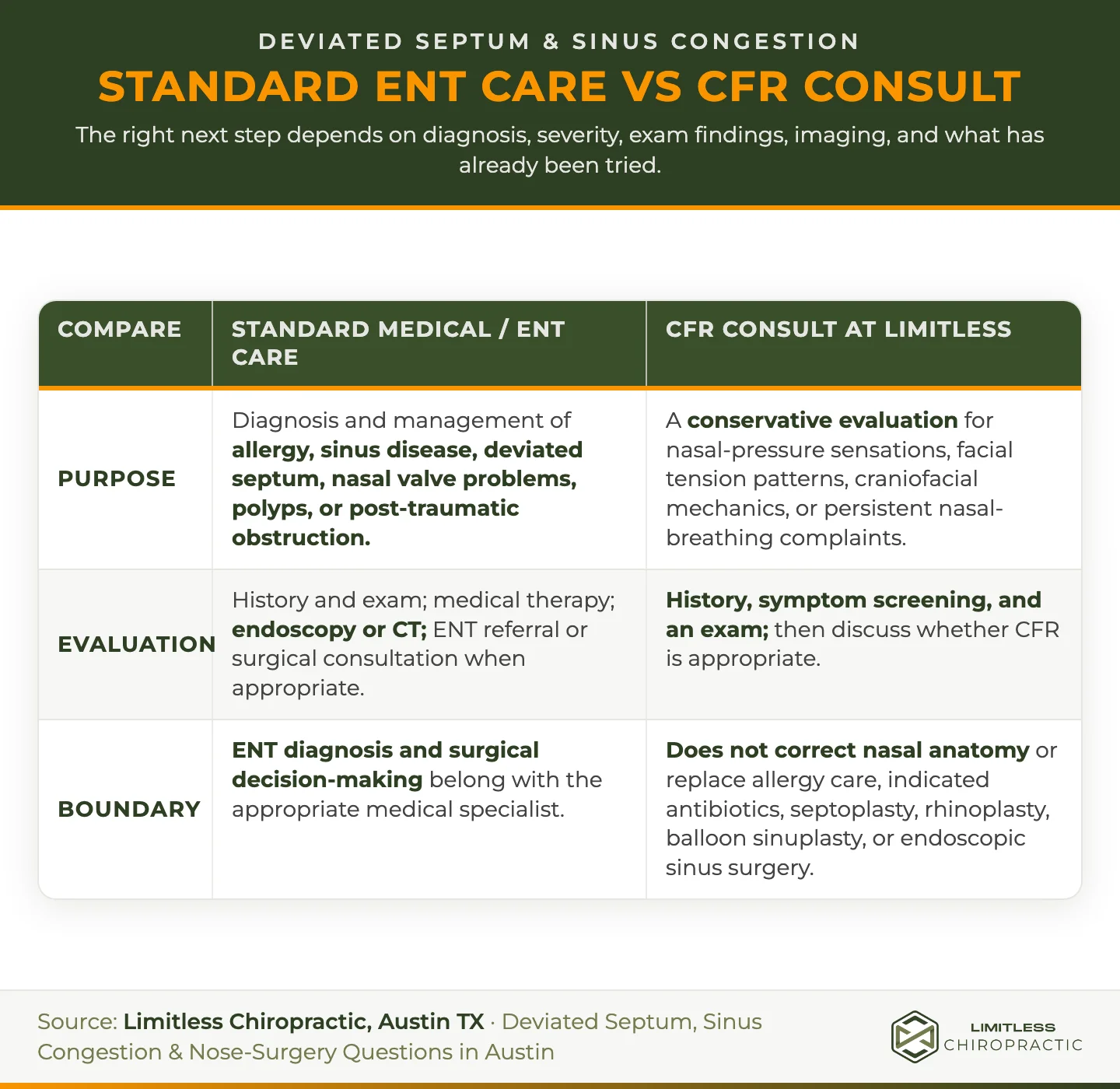
At Limitless, CFR may be discussed when a patient wants a conservative evaluation for nasal-pressure sensations, facial tension patterns, craniofacial mechanics, or persistent nasal-breathing complaints that do not clearly require urgent medical or surgical care first.
The consult is honest. If the history sounds like chronic rhinosinusitis, recurrent infections, nasal polyps, significant trauma, or structural obstruction, referral is the responsible recommendation. If the case is more mechanical, mild, or already medically evaluated, your chiropractor can discuss whether CFR is reasonable, what the procedure involves, what outcomes are realistic to watch, and when to stop or refer.
How Limitless frames CFR for sinus and nasal-obstruction concerns: CFR is a conservative consultation option for selected patients. It is not a substitute for allergy care, antibiotics when indicated, CT or endoscopy-supported sinus diagnosis, septoplasty, rhinoplasty, balloon sinuplasty, or endoscopic sinus surgery, and it does not correct nasal anatomy.
FAQ
Is CFR an alternative to septoplasty?
No. Septoplasty is a surgical option for selected patients with nasal obstruction associated with a deviated septum. CFR should not be described as straightening the septum or replacing an ENT surgical recommendation.
Can CFR fix a deviated septum?
No. A deviated septum is a structural finding, and correcting it is a surgical decision made inside ENT care. CFR does not change nasal anatomy. What a Limitless consult can do is help you understand whether your blockage pattern sounds like a referral-first problem.
Is CFR an alternative to balloon sinuplasty?
No. Balloon sinus dilation is an ENT procedure for selected chronic or recurrent sinus disease cases, typically after appropriate diagnosis and medical therapy. CFR is not the same procedure and should not be presented as equivalent.
Can a chiropractor tell if I need ENT care?
A chiropractor can screen for referral signs and help you decide whether your presentation sounds referral-first. ENT diagnosis and surgical decision-making belong with the appropriate medical specialist.
What if my congestion is from allergies?
Allergic rhinitis has its own medical management lane, including trigger control and medications when appropriate. CFR should not be framed as allergy treatment.
What if I broke my nose years ago?
A past nasal fracture can matter, especially if you now have one-sided obstruction, visible deformity, or worsening breathing. That is often an ENT evaluation question first. Limitless can discuss conservative care only after the referral boundary is clear.
What happens at Limitless if I book for this?
The visit starts with history, symptom screening, and an exam. If your symptoms suggest sinus disease, allergy, structural obstruction, trauma complications, or a surgical question, the recommendation may be referral or co-management. If the case fits conservative care, the doctor can explain whether CFR is appropriate.
Want a conservative, referral-aware opinion on your nasal-breathing or sinus-pressure concern?

