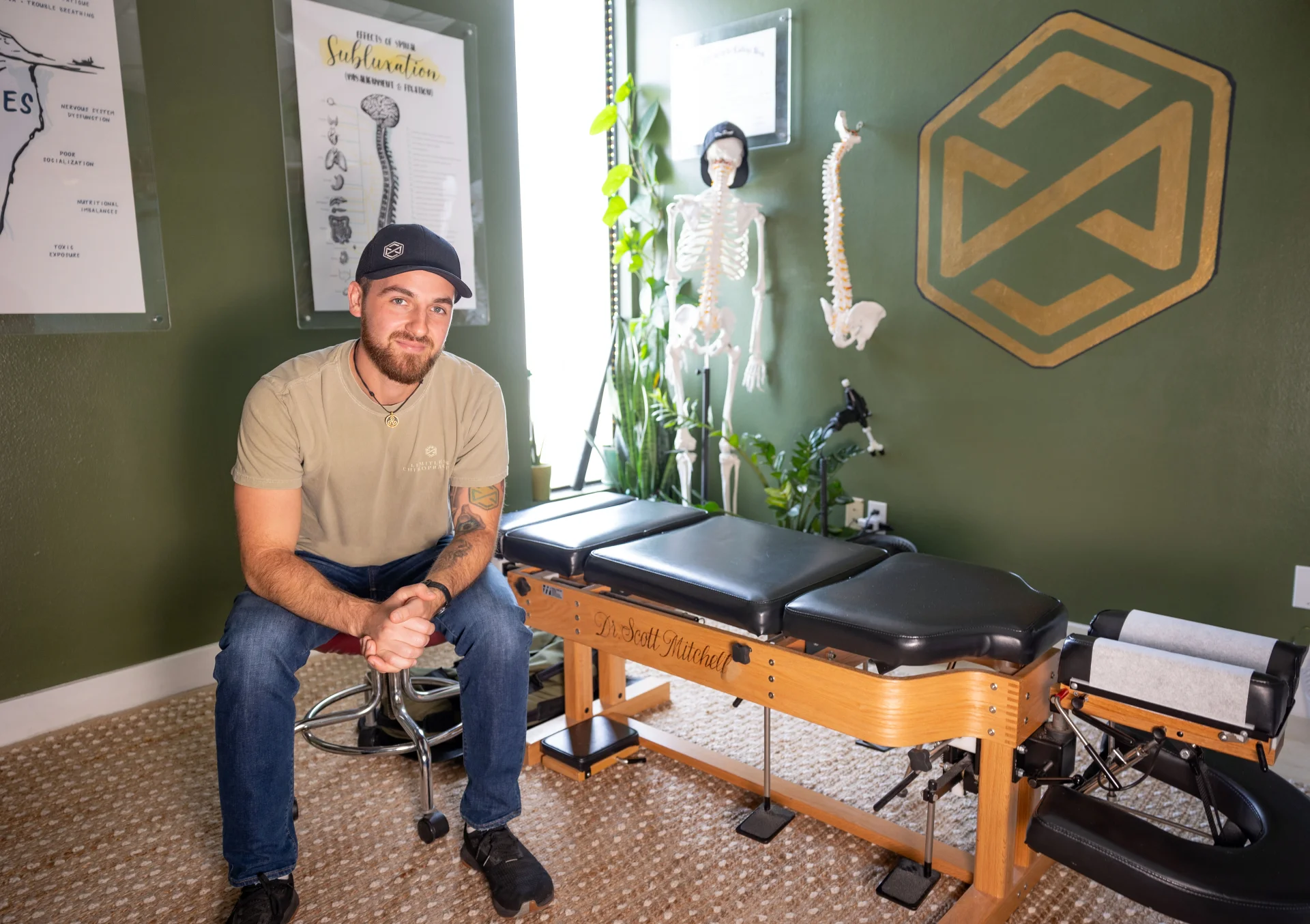
You're dealing with back pain, neck stiffness, or shoulder dysfunction. You know you need help, but you're stuck on the first question:
Should I see a chiropractor or a physical therapist?
It's a fair question. Both are healthcare providers. Both treat musculoskeletal conditions. Both use hands-on techniques and conservative (non-surgical) approaches. And both have offices all over Austin.
But they're not interchangeable.
Chiropractors and physical therapists have different training, different scope, and different treatment philosophies. Some conditions fit chiropractic care better. Some fit physical therapy better. And many benefit from both working together.
This guide breaks down the actual differences, not the marketing spin. We'll cover what each provider does, what conditions they treat best, how Texas insurance handles each, and when you need one, the other, or both.
At Limitless Chiropractic, we give honest recommendations. If you call us and we think physical therapy is the better starting point for your condition, we'll tell you. If you're not sure which you need, call (512) 999-6115 or book a consultation online, we'll evaluate your condition and give you a straight answer.
"We give honest recommendations. If physical therapy is the better starting point for your condition, we'll tell you. Your recovery is the goal, not protecting our turf."
Not sure whether you need a chiropractor or a physical therapist? We'll evaluate your condition and give you a straight answer.
Chiropractors focus on structural alignment. Physical therapists focus on functional movement and strength
Different tools for different problems. Neither is "better" in the abstract
Acute joint pain, disc issues, cervicogenic headaches, and post-accident injuries usually start with chiropractic
These conditions involve joints that are stuck or misaligned and respond to adjustments
Post-surgical rehab, muscle weakness, gait dysfunction, and chronic overuse usually start with PT
These conditions need progressive loading and movement retraining, not adjustments
Disc injuries, chronic pain, post-accident recovery, and extremity injuries with spinal compensation benefit from co-management
Both providers contribute different pieces of the recovery
Texas insurance covers PT well for most patients. Chiropractic coverage is limited or absent on many plans
Cash-pay becomes the real comparison for chiropractic care in Austin
Limitless will refer to PT when PT is the right starting point
You get clinical judgment, not a sales pitch
Training and Scope: What's the Actual Difference?
Chiropractors (DC, Doctor of Chiropractic)
Education: 4-year doctoral program after a bachelor's degree, with over 3,200 clinical hours. Chiropractic school focuses heavily on the nervous system, both the central nervous system (CNS) and the peripheral nervous system (PNS). Coursework also covers anatomy, physiology, neurology, radiology, orthopedics, and chiropractic technique.
Licensing: State-licensed in Texas. Scope includes diagnosing musculoskeletal conditions, ordering and interpreting imaging (X-rays, MRI), performing physical examinations, and delivering adjustments.
Primary tool: Spinal and extremity adjustments, high-velocity, low-amplitude manipulations that restore joint mobility and alignment.
Philosophy: Chiropractic is fundamentally about restoring the connection between the brain and the body by removing interference from the spine. When vertebrae or joints are misaligned, nerve communication is disrupted, which can cause pain, dysfunction, and systemic health issues. Adjustments correct the alignment and restore proper nervous system function.
Physical Therapists (DPT, Doctor of Physical Therapy)
Education: 3-year doctoral program after a bachelor's degree, with similar clinical hours to chiropractors. Coursework includes biomechanics, movement analysis, therapeutic exercise, and manual therapy techniques.
Licensing: State-licensed in Texas. Scope includes diagnosing movement dysfunction, prescribing therapeutic exercise, performing manual therapy, and using modalities like ultrasound, electrical stimulation, and heat/cold therapy.
Primary tool: Therapeutic exercise and stretching. PTs design exercise programs to strengthen weak muscles, improve range of motion, and retrain movement patterns.
Philosophy: Functional movement and strength restore pain-free activity. When muscles are weak or movement patterns are faulty, pain and injury result. Exercise and movement retraining correct the dysfunction.
Training and Scope at a Glance
Dimension
Chiropractor (DC)
Physical Therapist (DPT)
Doctoral program
4 years after bachelor's, 3,200+ clinical hours
3 years after bachelor's, similar clinical hours
Texas licensing scope
Diagnose, order and interpret imaging, examine, adjust
Diagnose movement dysfunction, prescribe exercise, manual therapy, modalities
Primary tool
Spinal and extremity adjustments (HVLA manipulation)
Therapeutic exercise, stretching, manual therapy
Core focus
Structural alignment and nervous system interference
Functional movement, strength, and movement patterns
Philosophy
Restore brain-body connection by removing spinal interference
Restore pain-free activity through movement and strength
The Overlap and the Difference
Both can:
Treat joint pain and musculoskeletal conditions
Perform manual therapy (hands-on soft tissue and joint work)
Use conservative, non-surgical approaches
Order imaging (in many states, including Texas)
The key difference:
Chiropractors focus on structural alignment. We assess how your spine and joints are positioned, identify misalignments, and use adjustments to restore proper position.
Physical therapists focus on functional movement and strength. They assess how your body moves, identify weak or dysfunctional patterns, and use exercise to rebuild strength and movement quality.
Neither is "better." They're different tools for different problems.
Conditions Chiropractors Typically Treat First
Chiropractic is the right starting point when your condition involves structural or neurological problems: vertebrae out of position, joint fixation, disc compression, or nerve involvement from misalignment.
Spinal Misalignment and Joint Dysfunction
Acute lower back pain from lifting, twisting, or sudden movement
Neck pain and stiffness (especially after sleeping wrong or a car accident)
Mid-back pain between the shoulder blades
Rib pain and restricted breathing mechanics
Why chiropractic first: These conditions involve joints that are "stuck" or misaligned. Adjustments restore mobility and position, which reduces pain and allows the body to heal.
What to expect at Limitless: In-house digital X-rays to assess alignment, chiropractic adjustments targeting misaligned segments, and acute-phase care (ice, e-stim, soft tissue work). Typical recovery: 4 to 8 weeks for acute cases.
Headaches with Cervical Origin
Cervicogenic headaches (headaches originating from the neck)
TMJ dysfunction linked to upper cervical misalignment
Migraines triggered by neck tension or cervical nerve irritation
Why chiropractic first: The upper cervical spine (C1, C2, C3) houses nerves that connect to your head and face. When these vertebrae misalign, they compress nerves that cause headaches. Adjusting the cervical spine addresses the source.
Disc-Related Conditions
Disc herniations and bulges (especially when spinal decompression is indicated)
Sciatica from disc compression on the sciatic nerve
Radicular pain (shooting pain down arms or legs from nerve involvement)
Why chiropractic first: Disc injuries often respond well to spinal decompression therapy, a non-surgical treatment that creates negative pressure in the disc to pull herniated material back into place. At Limitless, we combine decompression with adjustments to stabilize the spine and prevent recurrence. Spinal decompression is cash-pay only. Insurance does not cover it.
Whiplash and soft tissue injury from car accidents
Acute trauma with alignment changes visible on imaging
Why chiropractic first: Car accidents cause rapid deceleration forces that shift vertebrae out of position and stretch ligaments. Early chiropractic evaluation (within 72 hours) establishes a baseline, documents injury, and starts treatment during the critical recovery window.
Chronic pain that plateaued on single-modality care
Depends on driver
Depends on driver
Yes
Conditions Physical Therapists Typically Treat First
Physical therapy is the right starting point when your condition involves functional problems, weak muscles, poor movement patterns, post-surgical recovery, or gait dysfunction.
Post-Surgical Rehabilitation
ACL repair, rotator cuff surgery, hip replacement, spinal fusion
PT rebuilds strength and range of motion after surgery through supervised exercise protocols
Why PT first: Surgery disrupts muscles, tendons, and movement patterns. Physical therapists design progressive exercise programs that restore function without re-injury.
Muscle Weakness and Imbalance
Chronic weakness in specific muscle groups (glutes, rotator cuff, core stabilizers)
Muscle atrophy after injury, immobilization, or prolonged inactivity
Why PT first: Strengthening weak muscles is the primary intervention. Physical therapists identify which muscles are underactive and prescribe targeted exercises to rebuild strength.
Gait and Movement Dysfunction
Abnormal walking patterns causing hip, knee, or ankle pain
Balance issues, especially in elderly patients or post-stroke recovery
Why PT first: Gait analysis and movement retraining are PT specialties. They use video analysis, balance testing, and corrective cueing to fix faulty movement patterns.
Sports-Specific Rehab and Conditioning
Return-to-sport protocols after injury (ACL, shoulder, ankle)
Movement pattern correction for athletes (running mechanics, jump landing, throwing mechanics)
Why PT first: Sports rehab requires sport-specific movement analysis and progressive loading protocols. PTs design programs that safely return athletes to competition.
Chronic Overuse Injuries Requiring Strength Focus
Runner's knee (patellofemoral pain syndrome)
Tennis elbow or golfer's elbow
Plantar fasciitis (when strength deficits in foot/calf are the primary driver)
Why PT first: These conditions often stem from weak stabilizers or faulty movement patterns. Strengthening the supporting muscles addresses the root cause.
When Limitless Refers to Physical Therapy
We're not territorial. If you come to Limitless and we determine that physical therapy is the better starting point for your condition, we'll tell you.
We refer to PT when:
You're post-surgical and need supervised rehab protocols
You have severe muscle weakness where strengthening is the primary need
You have gait dysfunction requiring specialized movement analysis
You've been treated chiropractically and plateaued, adding PT may be the missing piece
We coordinate with physical therapists we trust in Austin when co-management is indicated. Your recovery is the goal, not protecting our turf.
Conditions Where Co-Management Wins
Some conditions benefit from both chiropractic and physical therapy working together.
When Chiropractic and PT Work Together
Condition
Chiropractic Role
PT Role
Disc injuries with muscle compensation
Decompression addresses the herniated disc, adjustments stabilize the spine
Strengthens core and stabilizers to prevent recurrence
Chronic pain (structural and functional components)
Corrects misalignments driving the pain
Builds strength to support the corrected structure and prevent re-injury
Post-accident recovery (car accidents)
Addresses acute whiplash and spinal trauma in the first 72 hours and through acute phase
Rebuilds strength and range of motion once acute phase resolves
Extremity injuries with spinal compensation
Adjusts cervical spine and shoulder joint (example: shoulder pain driven by cervical misalignment)
Strengthens rotator cuff and scapular stabilizers
For post-accident cases specifically, early chiropractic evaluation documents injury and starts treatment in the critical recovery window. See Personal Injury Chiropractor in Austin for the full post-accident workflow.
At Limitless, we coordinate with PTs when co-management makes clinical sense. We're focused on your outcome, not protecting our billing.
Recovering from a disc injury, chronic pain, or a car accident? Co-managed care often outperforms single-modality treatment.
We coordinate with trusted PTs in Austin when it's the right move
How Texas Insurance Treats Each (And Why Cash-Pay Changes the Calculus)
Insurance Coverage Reality in Texas
Physical Therapy:
Most insurance plans cover PT with a physician referral
Typical coverage: capped visit count per year (varies by plan)
Copays: vary by plan; check your benefits before booking
Limitation: Session caps and pre-authorization requirements can delay or limit care
Chiropractic:
Some insurance plans cover chiropractic (varies widely by carrier and plan)
When covered, plans typically allow a limited visit allotment, with growing exclusions
Copays vary by plan when chiropractic is covered
Limitation: Chiropractic coverage in Texas plans has become less generous over the past several years, with more plans excluding it entirely or sharply capping visit counts
What this means for Austin patients:
If you have good PT coverage with high visit limits, physical therapy may be more affordable through insurance.
If your insurance doesn't cover chiropractic well, or at all, then cash-pay becomes the comparison point.
One important note on decompression: Insurance does NOT cover spinal decompression. It is a cash-pay treatment regardless of carrier. If decompression is part of your plan of care, expect to pay out of pocket. For full pricing context, see What Chiropractic Costs in Austin: The Cash-Pay Guide.
Cash-Pay Reality
Cash-pay pricing for chiropractic and PT varies across Austin. At Limitless, single-visit adjustments run $50 to $85, and a first visit is $200 normally or $97 with our new-patient special. Spinal decompression is package-priced, structured around the 16 to 30 session protocol over 2 to 4 months. We walk through exact package costs at the consult. For granular pricing across the full care plan, see our cash-pay cost guide for Austin.
At Limitless Chiropractic (cash-based practice):
No insurance dependency for treatment decisions, you get what you need clinically, not what insurance approves
Transparent pricing (no surprise bills)
Longer visits (we're not rushing to hit insurance billing codes)
You can still pursue reimbursement through PIP, MedPay, or personal injury claims if applicable
If insurance covers PT well, PT may be cheaper. If insurance doesn't cover either well, chiropractic cash-pay is often more affordable and offers more treatment flexibility.
So Which Do You Need? A Decision Framework
Still not sure? Here's a quick decision tree:
See a chiropractor first if:
You have acute back or neck pain from a specific incident (lifting, twisting, car accident)
Your pain is sharp and localized to joints or spine
You have headaches originating from your neck
You suspect disc involvement (shooting pain down arms or legs)
You want structural assessment with imaging
See a physical therapist first if:
You're recovering from surgery
You have muscle weakness or atrophy
Your pain is from overuse or repetitive strain (runner's knee, tennis elbow)
You need gait or movement pattern analysis
You've been told you need to "strengthen your core" or specific muscle groups
See both (co-management) if:
You have chronic pain that hasn't responded to single-modality treatment
You have a disc injury (chiropractic decompression + PT strengthening)
You're post-accident and need both structural correction and functional rehab
You have an extremity injury with spinal compensation (shoulder pain + neck misalignment)
Still not sure?
Call (512) 999-6115 or book a consultation at Limitless. We'll do a comprehensive evaluation and give you an honest answer, even if that answer is "you need physical therapy first."
We're healthcare providers, not salespeople. Your recovery is the goal.
What a First Visit at Limitless Looks Like
If you book a first visit at Limitless Chiropractic, here's what you can expect:
1.Comprehensive Exam (40 Minutes). Detailed history (when symptoms started, what makes them worse, what makes them better), orthopedic and neurological testing (range of motion, muscle strength, reflex testing), and movement and posture assessment (how your body moves and compensates).
2.In-House Digital X-Rays (If Indicated). Most Austin chiropractors don't have in-house imaging. If they suspect structural damage, they refer you out to a radiology center. You schedule another appointment, drive across town, and wait for results. At Limitless, we eliminated that delay. We have digital X-ray equipment right here. If imaging is indicated based on your exam, we take X-rays the same day. The chiropractor reviews the results with you immediately.
3.Clear Diagnosis and Treatment Plan. The chiropractor explains what's wrong (in plain language, not medical jargon), whether chiropractic is the right fit for your condition, and provides an honest referral if PT or another specialist makes more sense. We don't lock you into long contracts. We don't oversell treatment. You get honest clinical judgment.
4.Same-Day Treatment (If Appropriate). If your condition allows, we start treatment on Day 1: first chiropractic adjustment or decompression session, plus home care instructions (ice, stretching, movements to avoid).
The Bottom Line
Chiropractors and physical therapists both treat musculoskeletal conditions, but with different tools and philosophies.
Chiropractic focuses on structural alignment. We assess spinal and joint position, identify misalignments, and use adjustments to restore proper mechanics.
Physical therapy focuses on functional movement and strength. They assess how your body moves, identify weak or dysfunctional patterns, and use exercise to rebuild capacity.
Some conditions fit chiropractic first. Some fit PT first. Many benefit from both working together.
At Limitless, we give honest recommendations, even if that means referring you to PT. Your health is the priority, not our billable hours.
Frequently Asked Questions
Which should I see first, a chiropractor or a physical therapist?
It depends on what's wrong. Chiropractic is usually the right first step for acute mechanical back or neck pain, cervicogenic headaches, disc-related pain (herniation, bulge, sciatica), and post-accident injuries. PT is usually the right first step for post-surgical rehab, muscle weakness or atrophy, gait dysfunction, and chronic overuse injuries like runner's knee or tennis elbow. If you're not sure, call Limitless and we'll evaluate the condition and tell you honestly which is the better starting point.
Can I see both at the same time?
Yes. Co-management is common for disc injuries, chronic pain that has plateaued, post-accident recovery, and extremity injuries with spinal compensation. Chiropractic addresses the structural and joint side of the problem. PT builds the strength and movement quality that prevents recurrence. The two approaches complement each other when the case calls for it.
Does Texas insurance cover both?
Most Texas insurance plans cover physical therapy reasonably well with a physician referral, though session caps and pre-authorization requirements vary by plan. Chiropractic coverage is more variable. Coverage in Texas plans has become less generous over the past several years, with more plans excluding chiropractic entirely or sharply capping visit counts. Copays and visit limits vary by plan when chiropractic is covered, so check your benefits before booking. Spinal decompression is never covered by insurance. It is a cash-pay treatment regardless of carrier.
How much does each cost in Austin cash-pay?
Cash-pay rates vary across Austin clinics. At Limitless, chiropractic adjustments run $50 to $85 per session, and a first visit is $200 normally or $97 with the new-patient special. Spinal decompression is package-priced. The average patient runs 16 to 30 sessions over 2 to 4 months at 15 minutes per session, and we discuss exact package pricing during your evaluation. Insurance does not cover spinal decompression. For full pricing context, see our cash-pay cost guide for Austin.
When will Limitless refer me to a PT?
We refer to PT when you're post-surgical and need supervised rehab protocols, when severe muscle weakness is the primary need, when gait dysfunction requires specialized movement analysis, or when chiropractic care has plateaued and adding PT is the missing piece. We coordinate with physical therapists we trust in Austin. Your recovery is the goal, not protecting our turf.
What if I'm not sure which I need?
Call (512) 999-6115 or book a consultation at limitlesschiroatx.com/book. We do a comprehensive 40-minute exam, take digital X-rays in-house if indicated, and give you a clear diagnosis and treatment plan. If physical therapy is the better starting point, we'll tell you. You get honest clinical judgment, not a sales pitch.
Ready to Get Started?
Call (512) 999-6115. Speak with our team about your specific condition. We'll help you determine whether chiropractic, PT, or both is the right path.
Book online. First-visit evaluation includes comprehensive exam, imaging if needed, and clear recommendations.
Walk-ins welcome for acute injury assessment.
Limitless Chiropractic in Austin gives honest recommendations. We'll evaluate your condition, give you a straight answer, and refer to PT when PT is the right call. Your recovery is the goal.
Honest recommendations. No long contracts. No upsell.
We're here to help you get the right care, at the right time, from the right provider.
Limitless Chiropractic | 2800 S I-35 Frontage Rd, Ste 175 | Austin, TX 78704 | Serving Downtown Austin, South Austin, Round Rock, Cedar Park, and Pflugerville
Dr. Scott Mitchell
About the author
Dr. Scott Mitchell, a Boston-accented chiropractor with a passion for holistic health,dedicates his life to helping people unlock their LIMITLESS potential through personalized chiropractic care.